
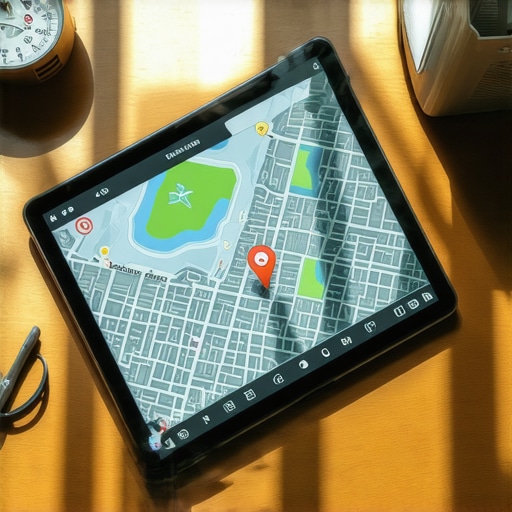
The scent of peppermint and old paper usually fills my office when I open a new audit. I have spent two decades protecting local merchants from the algorithmic tide. I view a business listing as a living proximity beacon. It is a mathematical stake in a spatial database. When that stake is pulled, the revenue stops. National chains pretend to be local neighbors; they buy their way in with brute force. I prefer the grit of a real storefront. My mission is simple. I find the glitch in the storefront data. I fix the forensic trace of a service area polygon. I restore the trust that Google demands before it lets you back into the Map Pack.
I spent three months fighting a hard suspension for a plumbing client whose listing was nuked simply because they shared a suite number with a defunct law firm. Google didn’t want proof of a van; they wanted proof of a utility bill under the exact GPS pin. We had to document every inch of that office. We had to prove that the plumber was not a ghost in a virtual suite. This is the reality of the reinstatement war. It is not about keywords. It is about physical evidence. If you are struggling with a similar situation, you might need to look at the evidence files what google really wants for profile reinstatement to understand the level of detail required. The algorithm does not care about your feelings. It cares about your utility bills and your lease agreements.
The ghost in the GPS coordinates
Google Business Profile ranking relies on spatial salience and GPS coordinate accuracy. If your map pin is offset by even a few meters, the local search algorithm may filter your business listing out of the Map Pack. This is known as centroid bias and it remains a primary ranking signal.
Many owners do not realize that their physical location is a collection of latitude and longitude digits. If these digits conflict with historical data, the profile breaks. I have seen businesses disappear because a delivery driver tagged their back alley as the main entrance. This creates a disconnect between the user experience and the data layer. To fix this, we use a specific process for the technical fixes that moved our map pin higher in three days. We align the digital coordinates with the reality of the sidewalk. We look at the microscopic math of the pin placement. A shift of ten feet can be the difference between page one and page ten. This is not guesswork; it is spatial engineering.
“Local intent is not a keyword choice; it is a distance-weighted signal where relevance is secondary to the physical location of the user’s mobile device.” – Map Search Fundamental
Why your physical address is a liability
Your physical address acts as a proximity beacon that can either anchor or sink your local SEO strategy. If you share an office suite or use a virtual office, you face a high risk of GMB profile suspension. Google prioritizes unique storefronts over shared service locations to prevent map spam.
The algorithm is suspicious of any address that looks like a mail drop. I often see agencies trying to rent addresses in the city center to trick the proximity filter. This is a death sentence. Google knows where the coworking spaces are. It knows which buildings have 500 different businesses listed in one room. If you have been caught in this trap, you need a how to fight a fake address suspension without losing your mind guide. You must prove that you have a dedicated entrance. You must show the signage. The days of tricking the map are over. Authenticity is the only currency that still buys rank. I have watched many businesses fail because they tried to take a shortcut with a secondary location that did not actually exist. The map-spam investigators are relentless.
Local Authority Reading List
- Proven methods to boost visibility today
- Link clean up tactics for maps
- Managing multiple map locations efficiently
- Identifying toxic links holding back rank
- Why a clean name wins the long game
The three mile radius that determines your revenue
The three mile radius represents the proximity filter where most local conversion occurs. Outside this zone, organic ranking signals weaken, making local service area settings and neighborhood-level data vital. Winning in the Map Pack requires dominating this specific spatial boundary through localized relevance.
If your business is outside this golden circle, your calls will drop off a cliff. We use behavioral zooming to fix this. We look at where the customers are actually searching from. Are they in the suburbs? Are they in the industrial district? If you want to expand your reach, you have to understand why your service area map pin disappears outside your zip code. It is often a matter of how your service area polygons are drawn in the backend. If you draw them too wide, Google thinks you are a spammer. If you draw them too small, you miss out on leads. The balance is delicate. It requires a forensic audit of your service areas. You cannot just check a box and expect to rank in the next town over. You need local justifications, such as reviews that mention those specific neighborhoods.
Cleaning the poison from historic citation spam
Citation spam and NAP inconsistency act as a silent poison for your local search presence. Old, broken redirects and toxic backlinks from low-quality directories can trigger a Google manual action. Cleaning these historic citation campaigns is the first step in any SEO audit and penalty recovery process.
I find old directory listings that have the wrong phone number from five years ago. This confuses the algorithm. It thinks your business moved or closed. This is why many profiles get stuck in the filter. We use a specific citation cleanup checklist that actually moves the pin. We hunt down every single mention of your business on the web. We fix the address. We fix the phone number. We ensure that every signal points to the same GPS coordinate. If your data is messy, your rankings will be messy. There is no way around it. You have to purge the poison of old, automated link packages that promised the world but delivered a penalty. Consistent data is the foundation of trust.
“Relevance is the foundation; distance is the filter; prominence is the reward.” – Local Search Theory Whitepaper
The microscopic logic of local search justifications
Local search justifications are the small snippets of text like “Sold here” or “Their website mentions” that appear in Map Pack listings. These justification triggers are pulled from customer reviews, Google Posts, and on-page SEO content. Optimizing these signals is the fastest way to increase your profile click-through rate.
The algorithm scans your reviews for specific keywords. If someone says “the best water heater repair in town,” Google uses that as a justification for a search for that service. This is why getting specific reviews is better than getting generic five-star ratings. We teach our clients the simple text script that actually lands 5 star reviews with high descriptive value. We want the customer to tell a story. We want them to name the service. We want them to mention the neighborhood. This creates a rich data set for the AI to parse. When the AI sees that people are visiting your shop and talking about specific products, it builds a stronger case for your prominence. This is how you outrank the big national players who only have generic corporate pages.
How to get more calls without more reviews
Google Business Profile conversion is driven by engagement signals such as photo views, direct messages, and call button clicks. Improving your profile impressions is useless if you do not turn more clicks into phone calls. Small tweaks to your business categories and primary attributes can double your local lead generation.
I see businesses with 500 reviews that get fewer calls than a shop with 50. The difference is the engagement. Are you answering the messages? Are you posting new photos every week? Most importantly, are your links working? I have found that why broken redirects are the silent killer of your map rank is a major issue for established brands. A customer clicks the website button, hits a 404 error, and immediately bounces back to the search results. This tells Google your business is not reliable. We audit the technical infrastructure of the profile. We ensure the mobile lag is eliminated. If your profile loads slowly on a phone, the user will call the next person on the list. You have seconds to win that lead. Don’t waste them on a broken link or a blurry photo. Use turn more clicks into phone calls with this one profile hack to ensure you are capturing every single opportunity. The local market is a zero-sum game. Every call you miss goes to your neighbor across the street.